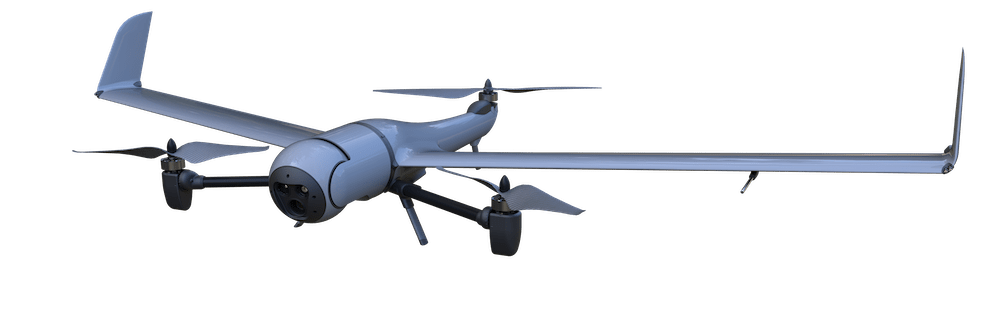
Providing an asymmetric advantage with quadcopters and fixed-wing VTOLs
The American-made Teal 2 quadcopter and Edge 130 Blue, a VTOL fixed-wing system, are both on the Defense Innovation Unit’s Blue List for acquisition by U.S. forces.

The American-made Teal 2 quadcopter and Edge 130 Blue, a VTOL fixed-wing system, are both on the Defense Innovation Unit’s Blue List for acquisition by U.S. forces.


Mobile and expeditionary units can’t always depend on a MQ-9 Reaper overhead, so they must bring their aerial surveillance with them.


Consolidate network monitoring, performance management, and fault isolation into a single, comprehensive solution.


The possibilities are endless with the next generation of Gray Eagle, making it easy to envision more missions and capabilities on the horizon.

No other aerospace and defense manufacturer is poised to deliver a CCA as capable as the one built by General Atomics, or one as economical, producible, and flexible.
There’s a new battlespace called “air-ground littoral” where quadcopters and fixed-wing VTOLs now dominate.

Flying MQ-9B in place of larger maritime patrol aircraft costs less and extends the sensing and endurance possible alongside those high-value platforms.


Cybersecurity skills must evolve in near-real time as Zero Day threats continue and AI provides new challenges.


All-source intelligence can be leveraged by artificial intelligence and machine learning to inform CONOPS like Joint All Domain Command and Control.

These upgrades will play a central role in the way American and allied forces fight, and are destined to keep them at the vanguard for a long time.

Adoption of the MQ-9 platform is just getting started; one of the most important new chapters for this platform will be the one written by the U.S. Marine Corps.

Gray Eagle STOL and Gray Eagle 25M are the best options for Army aviation as it assesses where to move from its current inflection point.


Blending superior optics, advanced stabilization and AI-powered autonomy in a compact and rugged system, ASELFLIR 600 delivers unmatched intelligence, surveillance and reconnaissance (ISR) capabilities.

Valuable intelligence insights can be gleaned from logistics or flight-test data when artificial intelligence or machine learning is applied.
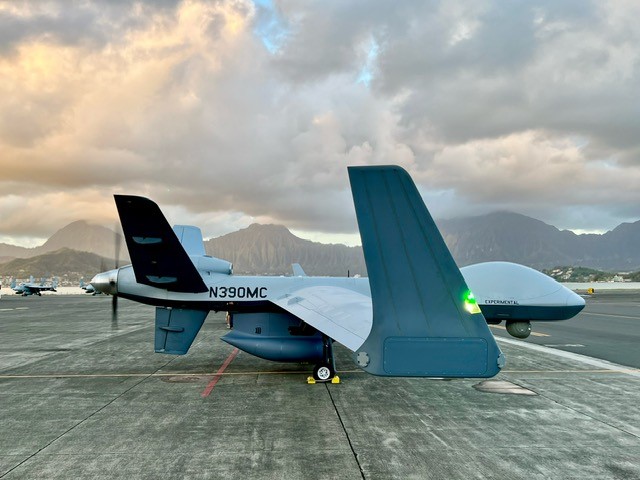
MQ-9B SeaGuardian®, built by San Diego-based General Atomics Aeronautical Systems, Inc., is leading the way in transforming naval and maritime operations around the world.


Radars, EW, EO/IR, space imagery, and microelectronics are brought under one roof for a streamlined approach to common people and factories.

When assessing the state of the art of unmanned aerial systems, it’s critical to be very clear about what various aircraft can and can’t do – and could never do.